Is it better to buy or rent in Paraguay?

The decision between buying or renting a home depends less and less on a universal answer and more and more on each person's financial, family and work situation.
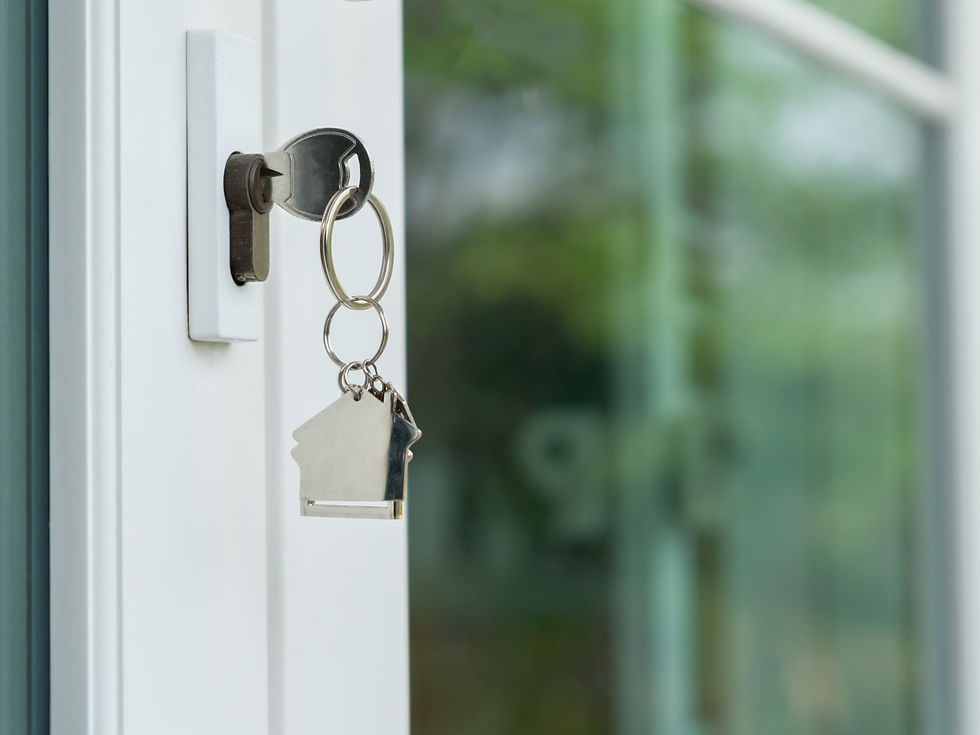
Buying or renting a home is one of the most important financial decisions a person or family can make. For a long time, purchasing a house or apartment was almost automatically seen as the ultimate goal of financial stability. However, changes in lifestyles, increased job mobility, the growth of the rental market, and the emergence of new financing options have made the answer much more complex today.
In Paraguay, this discussion takes on particular relevance within the context of an expanding real estate market, increased development of residential buildings, and a gradual growth in mortgage lending. The decision no longer hinges solely on comparing the cost of a mortgage payment with the price of rent, but rather on understanding which option best suits each buyer's or renter's life expectancy, income stability, and savings capacity.
Buying a home remains, for many, a way to build wealth. Unlike renting, where the monthly payment covers the use of a property belonging to someone else, buying allows each installment to gradually contribute to acquiring your own asset. Furthermore, it offers greater housing stability, protects against potential rent increases, and reduces exposure to currency risk in cases where rent is agreed upon in dollars while income is received in guaraníes, or vice versa. Added to this is the possibility that the property will appreciate over time if it is well-located and maintains its quality.
This logic is especially attractive for those who plan to stay in the same city or area for several years, have relatively stable incomes, and can afford a down payment. In these cases, the purchase can serve not only as a housing solution but also as a long-term asset investment. An apartment or house can later become a source of rental income, an asset for resale, or a store of family value.
However, buying also involves significant commitments. In addition to the property price, there are notary fees, taxes, maintenance, HOA fees, and potential repairs. It also requires a greater capital commitment, especially for the initial down payment. For someone who is not yet job-secured, plans to move soon, or needs to maintain liquidity, this decision may be less advantageous.
Renting, on the other hand, offers flexibility. It allows access to housing with a considerably lower initial outlay, makes it easier to move to a different area, and avoids some costs associated with ownership. For young professionals, families in transition, people who haven't yet decided where they want to live long-term, or those who prioritize mobility, renting can be a financially sound decision.
It also allows people to live in areas where buying would be much more expensive. A person can rent in established neighborhoods of Asunción, close to offices, schools, services, or shopping centers, without having to make the investment required to buy a property in that same location. In that sense, renting shouldn't necessarily be seen as a bad decision, but rather as a useful tool when flexibility is the priority.
The main disadvantage is that renting doesn't build equity. Month after month, the payment allows you to use the property, but it doesn't create property ownership. Furthermore, the tenant is subject to price adjustments, contract renewals, and decisions by the landlord. Therefore, while renting can be convenient at certain stages of life, in the long run many people return to considering buying as a way to stabilize their housing costs and accumulate wealth.
In practice, the most relevant comparison usually arises when a mortgage payment approaches the equivalent rent. At that point, many families begin to wonder if it makes sense to continue renting or if it's better to allocate a similar amount to buying their own home. The answer depends on several factors: the down payment, the interest rate, the loan term, the property's location, additional expenses, and the expected length of stay.
However, the decision is no longer always limited to choosing between buying or renting. In recent years, an intermediate alternative has gained traction: renting a home while buying an apartment off-plan. This approach allows buyers to address their immediate housing needs through renting, while simultaneously building equity through a project under development. Although the initial down payment and installments during construction may be more demanding than those of a traditional mortgage, in many cases the total financial cost ends up being lower, especially when payments are made directly to the developer. Furthermore, some companies in the sector have begun offering post-construction financing for terms ranging from three to ten years, expanding the options for buyers who do not necessarily have access to or prefer not to use bank financing.
If someone plans to stay in a city for a short time or is unsure whether their housing needs will change, renting might be a more prudent option. However, if they have a stable income, savings capacity, and a long-term plan, buying can be a more solid decision. Time is a key factor: the longer the intended stay, the more sense buying usually makes, because the initial costs are spread over a longer period and the property has more time to appreciate in value.
In Paraguay, the growth of housing finance is also changing this conversation. As mortgage lending becomes more widespread within the financial system, more people can consider homeownership not just as a future aspiration, but as a concrete possibility. The emergence of specific housing programs and increased competition among financial institutions broaden the options, although it remains crucial to carefully analyze the terms of each loan.
Ultimately, there's no single answer. Buying is usually a long-term investment decision, while renting prioritizes flexibility and reduces the need for initial capital. Both options can be suitable depending on a person's stage of life, financial situation, and goals.
Rather than asking whether it is better to buy or rent in absolute terms, the most important question is another: which option allows you to live better today without compromising your financial stability in the future.


