The Luxury Residential Market in Asunción: High Demand, Product Shortage, and a New Urban Landscape

In a context of accelerated urban transformation, luxury residences face growing demand and an increasingly limited supply in the most consolidated areas of the city.

The luxury residential market in Asunción is experiencing a period of high activity, marked by a particular combination of factors: sustained demand, driven by both local buyers and foreign investors, and a limited supply, especially with regard to new, modern properties that are well-positioned in terms of product.
The high-end housing segment is consolidating itself as one of the most sensitive to the urban, regulatory and social transformations that the city is undergoing, generating a scenario that, while presenting clear opportunities, also poses structural challenges for both buyers and developers and advisors.
In this context, Fátima Cubas, a Top Producer for five consecutive years since 2020 at Paraguay Sotheby's International Realty, provides a direct perspective on the segment based on her experience brokering high-value assets. With transactions exceeding USD 36.8 million in residential sales in Asunción by 2025, her track record allows us to understand both the depth of the market and the dynamics it is currently experiencing.
One of the most relevant elements of the current moment is the growing importance of international buyers. Asunción is gradually positioning itself as a destination for high-net-worth individuals who value both the country's tax advantages and its relative quality of life.
These buyers, in many cases, are not only looking for an investment, but also a primary or semi-permanent residence for their families. In this sense, factors such as proximity to schools, security, connectivity to the business district, and the quality of the urban environment become crucial.
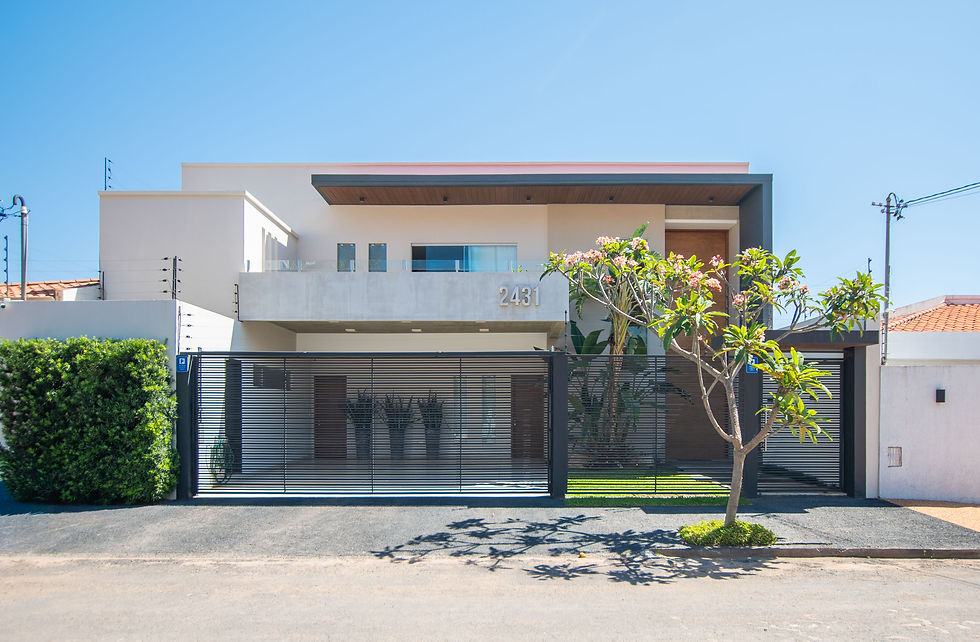
Areas like Santísima Trinidad, Mburucuyá, and sectors near the corporate hub continue to concentrate a large part of this demand, mainly due to their combination of accessibility, services, and established residential communities. At the same time, local buyers continue to be a significant factor, especially established business owners or families looking to upgrade their housing within the city.
Despite strong demand, the market faces a clear supply constraint. The most sought-after residences—new homes with contemporary design, good construction quality, and spacious lots—are scarce.
Currently, the most dynamic price range for these types of properties is approximately between USD 500,000 and USD 800,000, provided they are situated on plots larger than 540 or 600 square meters. This last point is key: lot size remains a central attribute in the Paraguayan buyer's perception of value, who continues to prioritize outdoor space, gardens, and swimming pools.
In contrast, much of the existing supply consists of remodeled homes or homes built on smaller plots, where the ratio of built area to open space is not always optimal. This creates a gap between what the market seeks and what is actually available.
From a design perspective, the idea of a balanced relationship between construction and land is consolidated, where the built area does not exceed approximately 60% of the total lot. This logic reflects a still-prevalent cultural preference: the appreciation of open space as an extension of the home.

One of the factors currently impacting the luxury housing market most significantly is the sustained growth of high-rise buildings in traditionally residential areas. The lack of strict regulations addressing issues such as privacy between properties has led to situations where high-rise developments are built alongside single-family homes, directly affecting their value.
The possibility of having buildings of more than six or eight stories with direct views into courtyards and private areas introduces a significant loss of privacy, which translates into an immediate adjustment in the valuation of neighboring properties. In many cases, a house impacted by this type of development comes to be considered primarily as "land value," geared towards future real estate projects, rather than as a finished residential property.
This phenomenon introduces an element of uncertainty into the market, making it difficult to even recommend "safe" areas in terms of preserving residential character. Historically established neighborhoods, such as Santo Domingo and Manorá, have begun to experience these kinds of transformations, demonstrating an increasingly flexible and less predictable urban dynamic.
Given this scenario, the choice of location is becoming increasingly dependent on the buyer's lifestyle. While those who need daily proximity to work and schools continue to prioritize Asunción, other profiles, especially those with greater work flexibility or in later stages of life, are beginning to consider alternatives in peripheral areas.

Municipalities like Mariano Roque Alonso, Luque, or even developing areas like Nueva Asunción and Ciudad del Este offer the possibility of accessing larger plots of land at significantly lower prices. However, the lack of established infrastructure and, above all, traffic problems on the access roads to the capital, remain a significant barrier for those who must meet demanding daily routines.
In this context, a hybrid model is emerging strongly: the combination of an apartment in Asunción for daily life and a second residence in more natural or gated environments, such as San Bernardino or developments like AquaVillage or AquaBrava. This approach reflects a search for balance between urban efficiency and quality of life, incorporating leisure as a structural part of the lifestyle.
Regarding product characteristics, there is a clear convergence towards certain attributes considered essential in the luxury segment. The most sought-after homes typically feature four en-suite bedrooms, spacious social areas, integrated spaces for entertaining guests, high ceilings (preferably over 2.80 meters), a climate-controlled barbecue area with a grill and outdoor pool, and high-quality finishes.
Security is also positioned as a key factor, especially for foreign buyers, who prioritize controlled and predictable environments.
In parallel, there is a growing market acceptance of purchasing completed or resale homes, in contrast to the traditional self-build model. However, the scarcity of well-finished and properly valued properties remains a significant limitation.

Liquidity in this segment is highly variable and directly linked to the alignment between owner expectations and market realities. A well-located and accurately valued property can sell in a matter of days, while those priced above market value can remain unsold for years.
This mismatch is particularly common in the high-end segment, where owners often incorporate appreciation expectations that are not always reflected in actual demand. In this sense, the market acts as an adjustment mechanism, determining the true transaction price.
The correct structuring of the offer, including price, presentation, commercial strategy and customer service, then becomes crucial for the speed of absorption.
The shortage of new, well-designed homes is partly due to the fact that owners of quality properties tend not to sell, or do so at prices higher than the market is willing to accept. This creates a bottleneck in supply, forcing buyers to consider alternatives.
Two main strategies stand out: acquiring properties with renovation potential, provided the structure and location justify it, or purchasing land for custom development. However, extensive renovations can be complex and costly, especially when the original layout of the house is not functional.

In many cases, demolition and construction from scratch ends up being a more efficient option in terms of both cost and final result.
Looking ahead, the luxury residence market in Asunción will maintain its relevance, driven by a structural demand that combines aspiration, the need for quality of life, and investment opportunities.
However, its evolution will be conditioned by key variables: the ability to generate new supply in line with current expectations, the need for more consistent urban planning, and the adaptation of market players to an increasingly informed and demanding buyer.
In this scenario, luxury housing ceases to be merely a real estate product and becomes a synthesis of multiple dimensions: location, design, privacy, environment and, increasingly, predictability in a transforming urban environment.


